Why walls fail
Most failed walls have the same problem: water. When rain soaks the soil behind a wall, the soil gets heavy and pushes. Without a way for water to drain out, the wall leans, bulges or cracks.
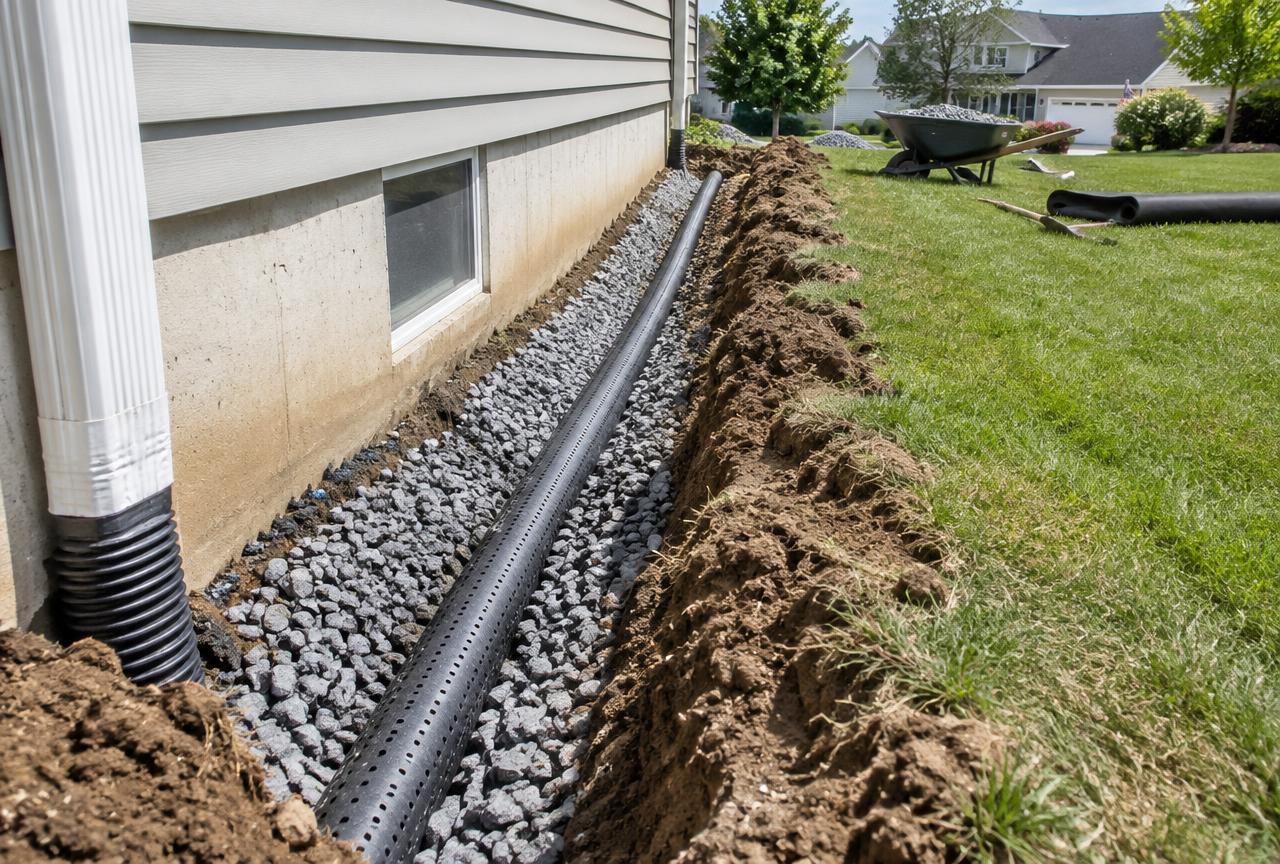
A strong wall has a gravel base, clean stone behind it, a drain pipe at the bottom, and is set back a little as it goes up. Taller walls may need special grid fabric tied into the soil and an engineer's design.
Wall types
Segmental block walls are made from concrete blocks that lock together. They are strong and come in many colors.
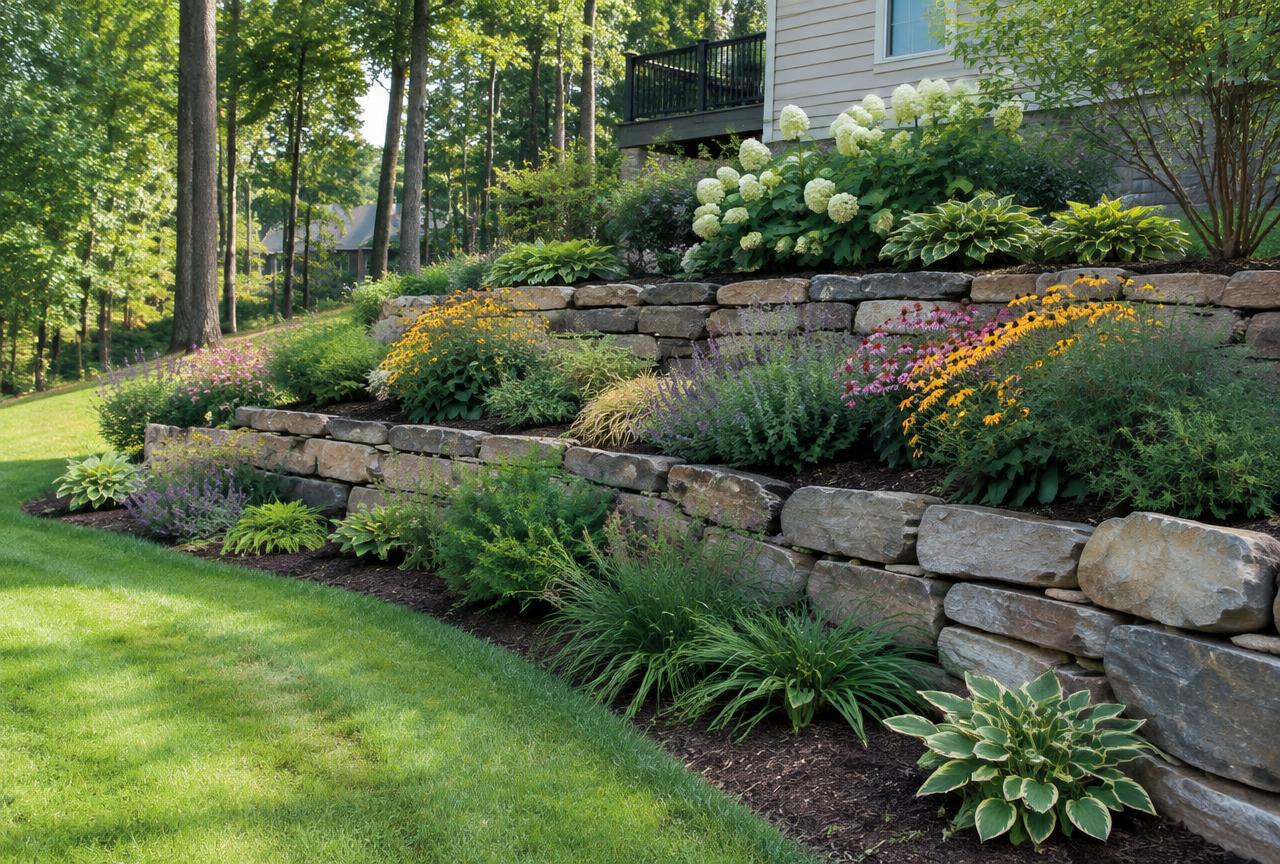
Natural stone walls use real fieldstone or boulders. They look great with older Bucks County homes.
- Segmental block walls
- Natural stone and fieldstone walls
- Boulder walls
- Tiered garden walls
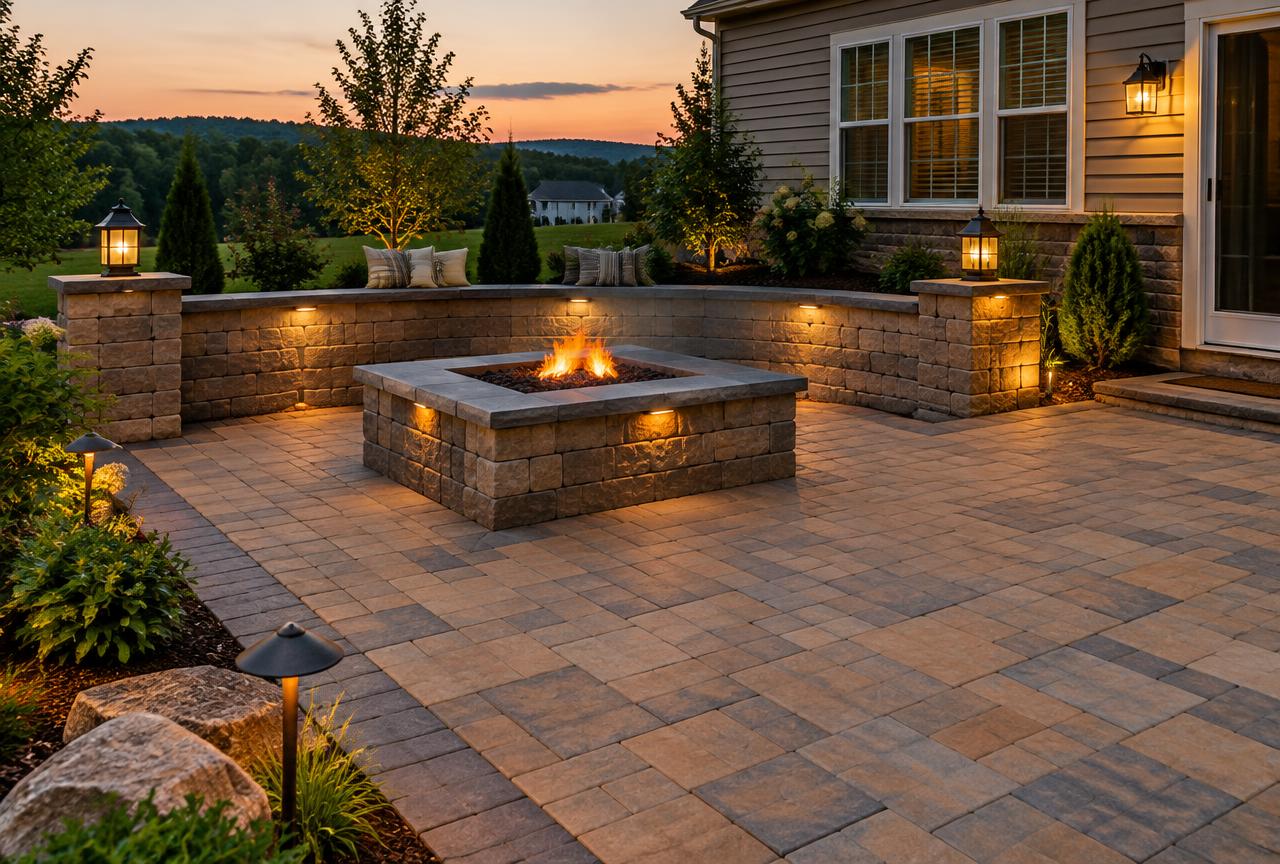
- Seat walls around patios
Repair or replace?
If your wall is leaning, cracked or has soil washing out, it may be fixable. Short walls can often be taken down and rebuilt with the same blocks and a proper drain. Your landscaper will check it and tell you what makes sense.
How it works
Getting help is simple. You fill out the short form on this page. We pass your request to one local landscaping company that serves your town. They call or text you to set up a visit.
At the visit, they walk your yard with you, listen to what you want, and look at things like slope, sun, soil and water flow. Then they give you a written quote. You decide if you want to move forward. There is no cost to ask.
- Step 1: Send the short form (about 1 minute).
- Step 2: A local landscaper reaches out to plan a visit.
- Step 3: You get a written quote for your yard.
- Step 4: You choose if and when to start.
Signs a wall is failing
- Leaning or bulging.
- Cracks or shifted blocks.
- Soil washing out at the base.
- Water seeping through the face.
What changes a wall quote
- Height and length.
- Stone or block type.
- Drainage behind the wall.
- Engineering and permit needs.
- Removal of an old wall.
Repair or replace?
Small sections can sometimes be reset. A wall that is leaning along its length, or has no drainage behind it, often needs a rebuild. A site visit is the only way to tell.
Retaining Walls near you
See local details for your town.