Picking the right size
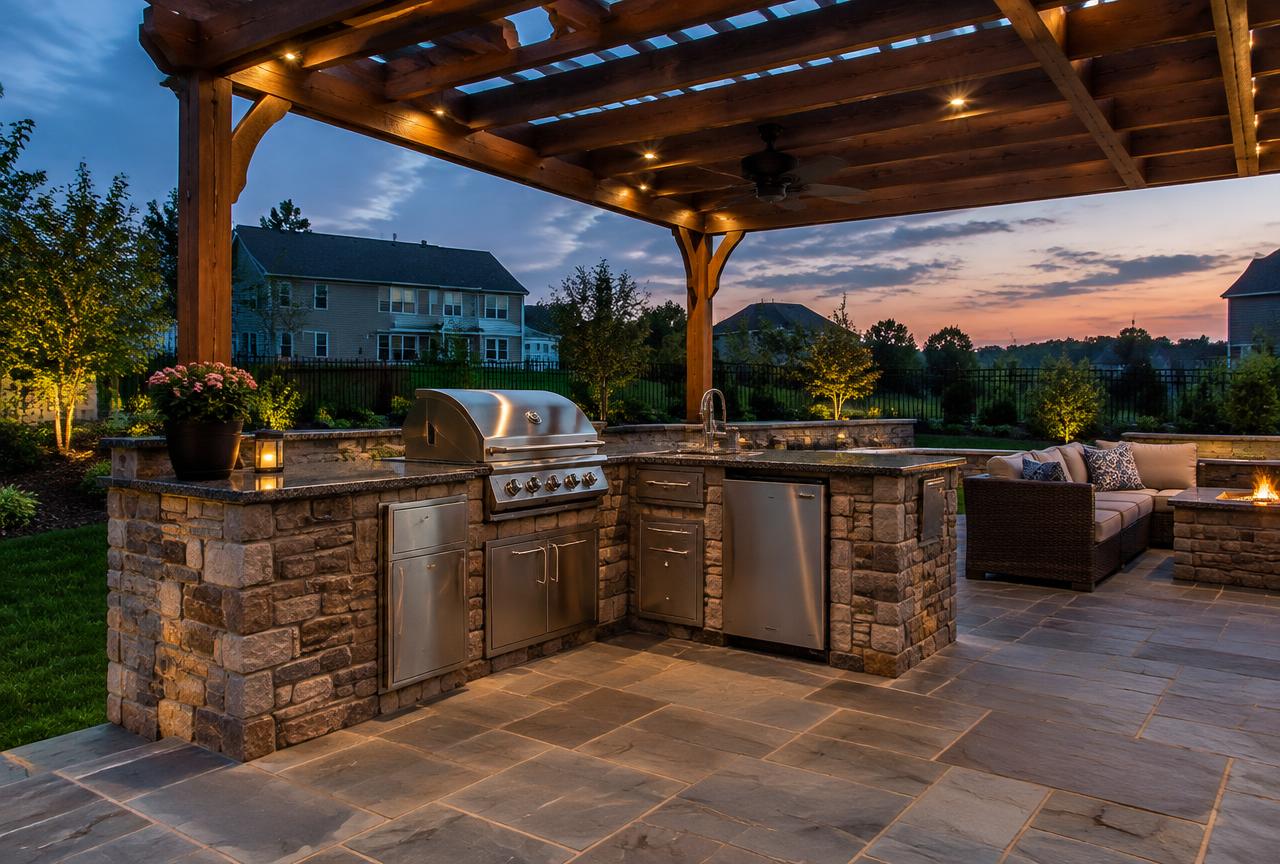
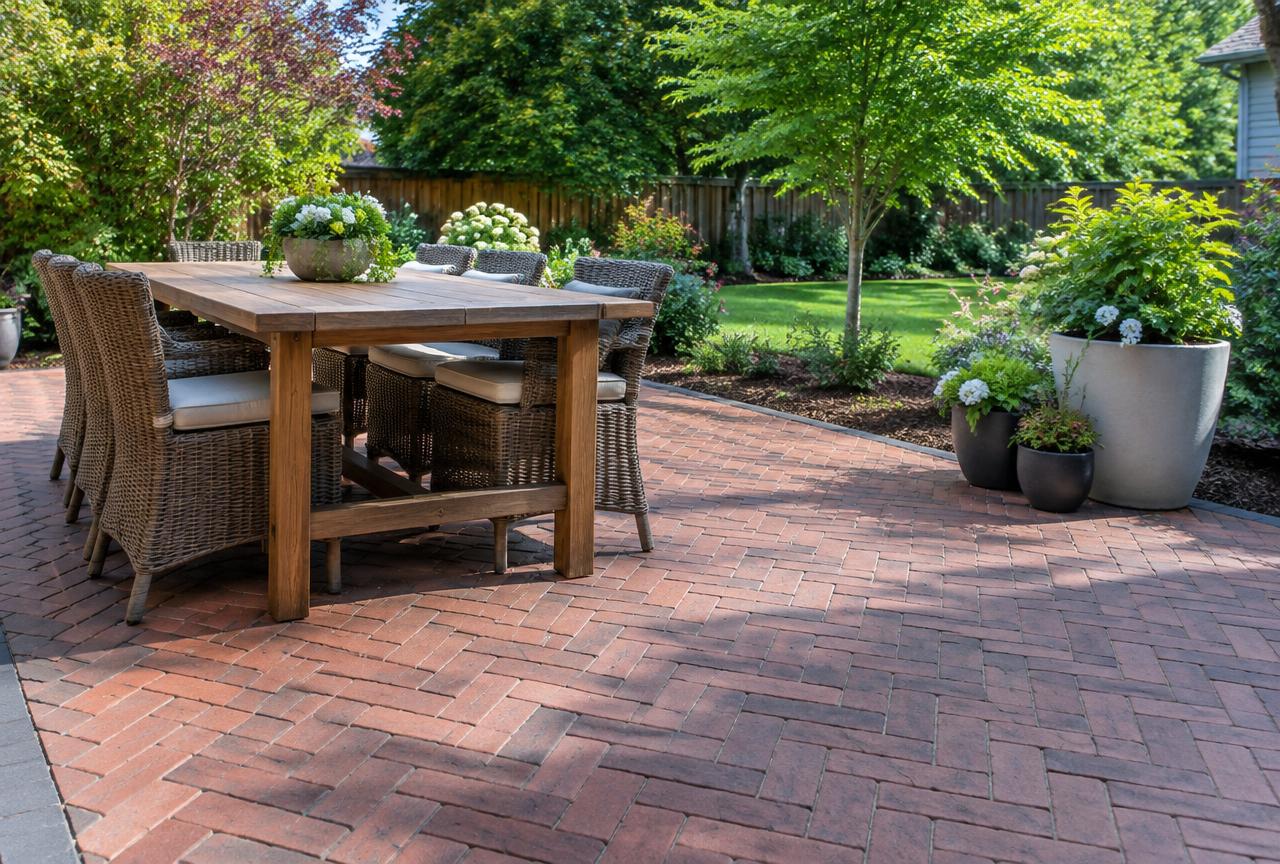
A good rule is to plan your patio around how you will use it. A table for six needs about 12 by 12 feet. Add room for a grill, a lounge area or a fire pit, and it grows fast.
Lay a garden hose or rope on the lawn in the shape you want. Put your chairs inside it. This simple trick helps you see if the space feels right before you spend a dollar.
Materials that work here
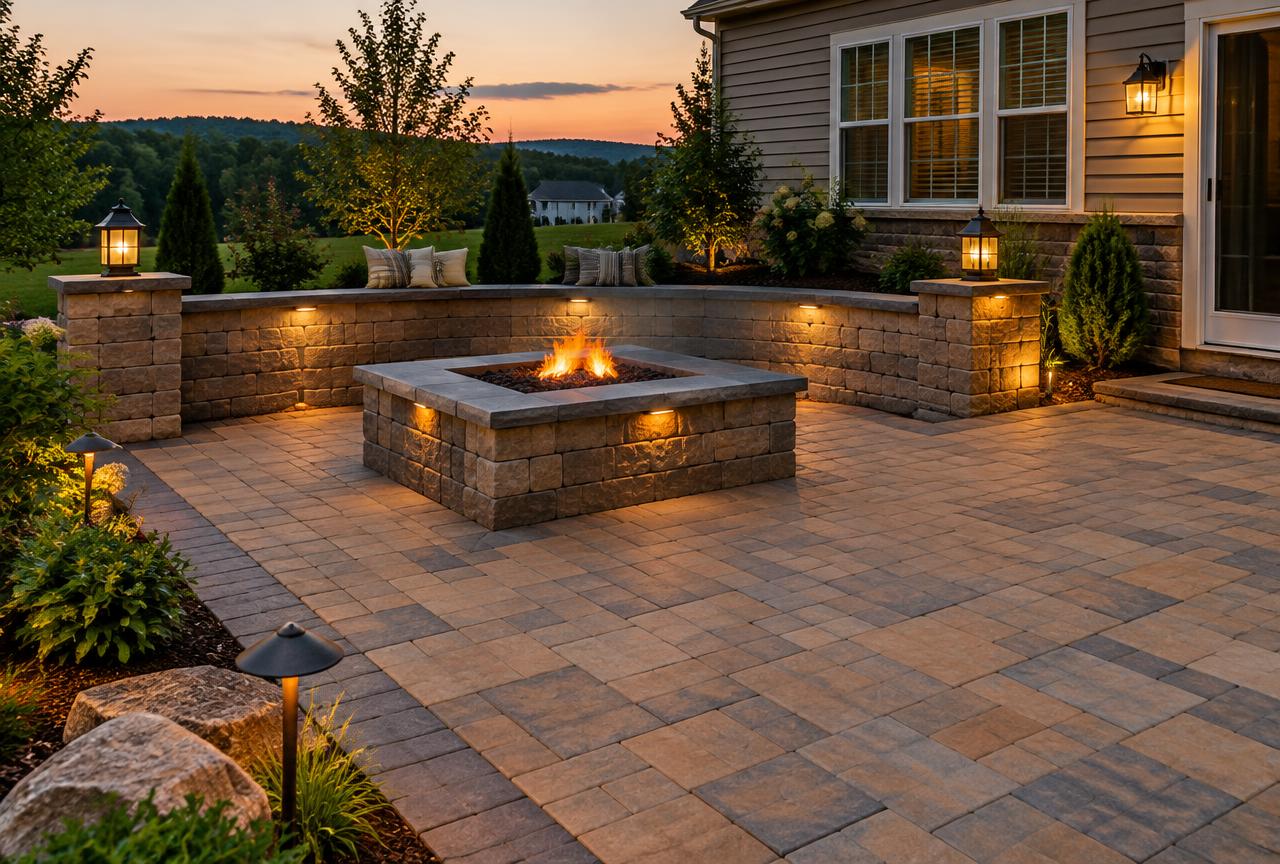
Concrete pavers are strong, come in many colors, and handle freeze and thaw well when laid on a proper base.
Bluestone is quarried in Pennsylvania and New York. It has a blue-gray color that looks great with stone and colonial homes.
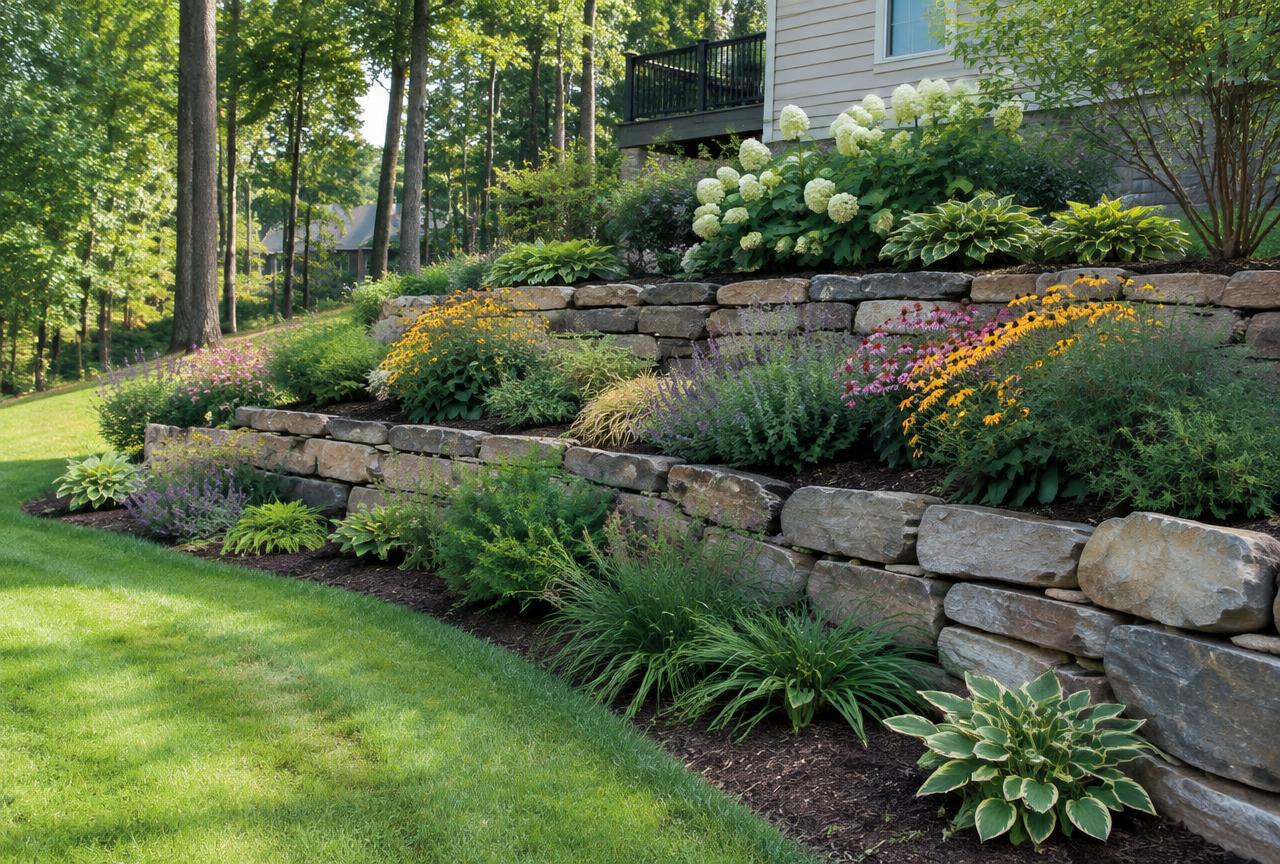
Flagstone has natural, uneven edges for a relaxed, garden feel.
- Concrete pavers
- Thermal bluestone (even cut)
- Natural cleft bluestone
- Irregular flagstone
- Belgian block borders
What changes the price
We do not list prices because every yard is different. What drives the cost is the size, the stone you pick, how much digging is needed, how easy it is to get machines into the yard, and extras like steps, walls or lighting.
A local landscaper will measure your space and give you a written quote with these details spelled out.
Care after it is built
Sweep and rinse your patio a few times a year. Pull any weeds early. Many people seal pavers every few years to keep colors bright. Avoid metal shovels and rock salt in winter, which can scratch or damage the surface.
How it works
Getting help is simple. You fill out the short form on this page. We pass your request to one local landscaping company that serves your town. They call or text you to set up a visit.
At the visit, they walk your yard with you, listen to what you want, and look at things like slope, sun, soil and water flow. Then they give you a written quote. You decide if you want to move forward. There is no cost to ask.
- Step 1: Send the short form (about 1 minute).
- Step 2: A local landscaper reaches out to plan a visit.
- Step 3: You get a written quote for your yard.
- Step 4: You choose if and when to start.
Signs your old patio needs work
- Sunken or tilted pavers.
- Weeds pushing through joints.
- Water pooling on the surface.
- Cracked or loose stones near the house.
Questions to ask before you hire
- How deep will you dig and how thick is the gravel base?
- What edge restraint will you use?
- What joint material will you use?
- How will water drain off the patio?
- Who handles permits and 811 utility marking?
Paver & Stone Patios near you
See local details for your town.