What hardscaping includes
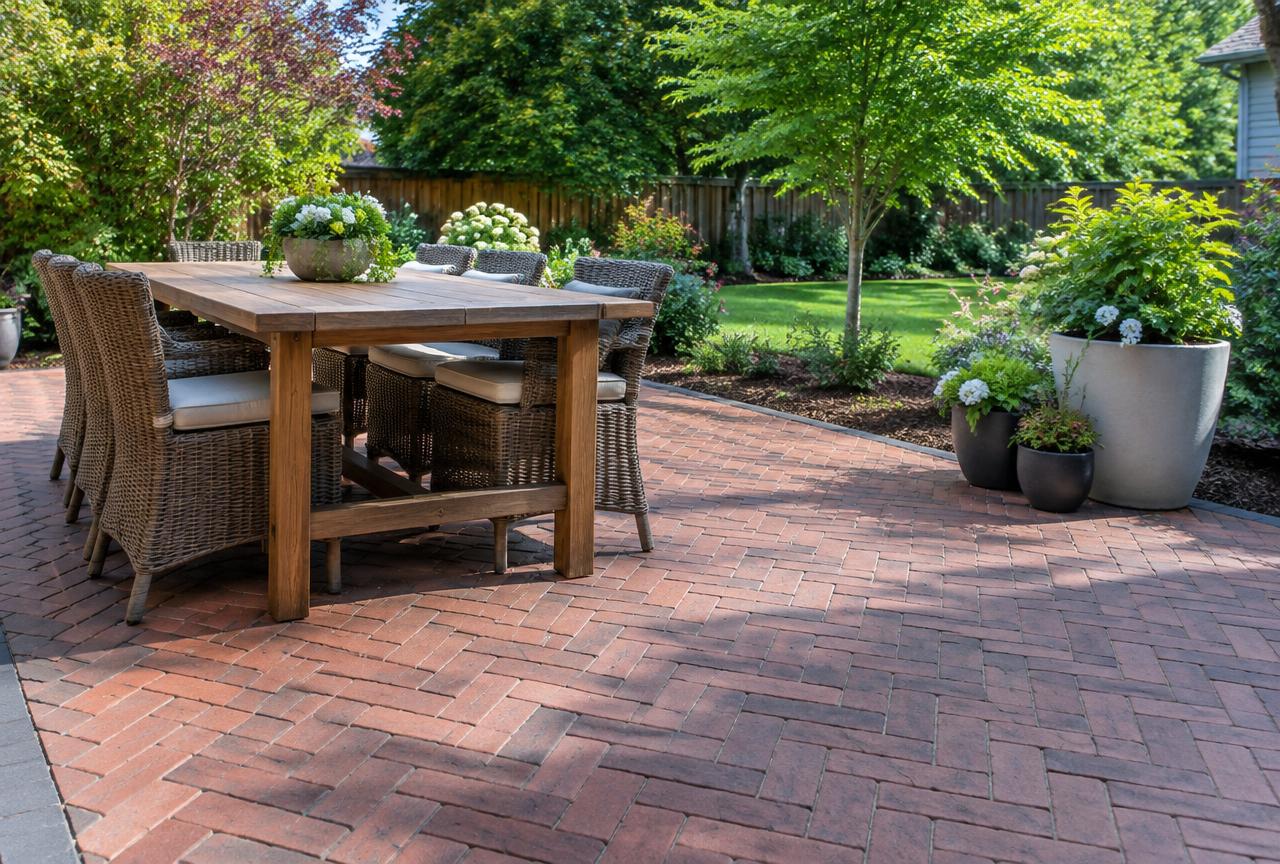
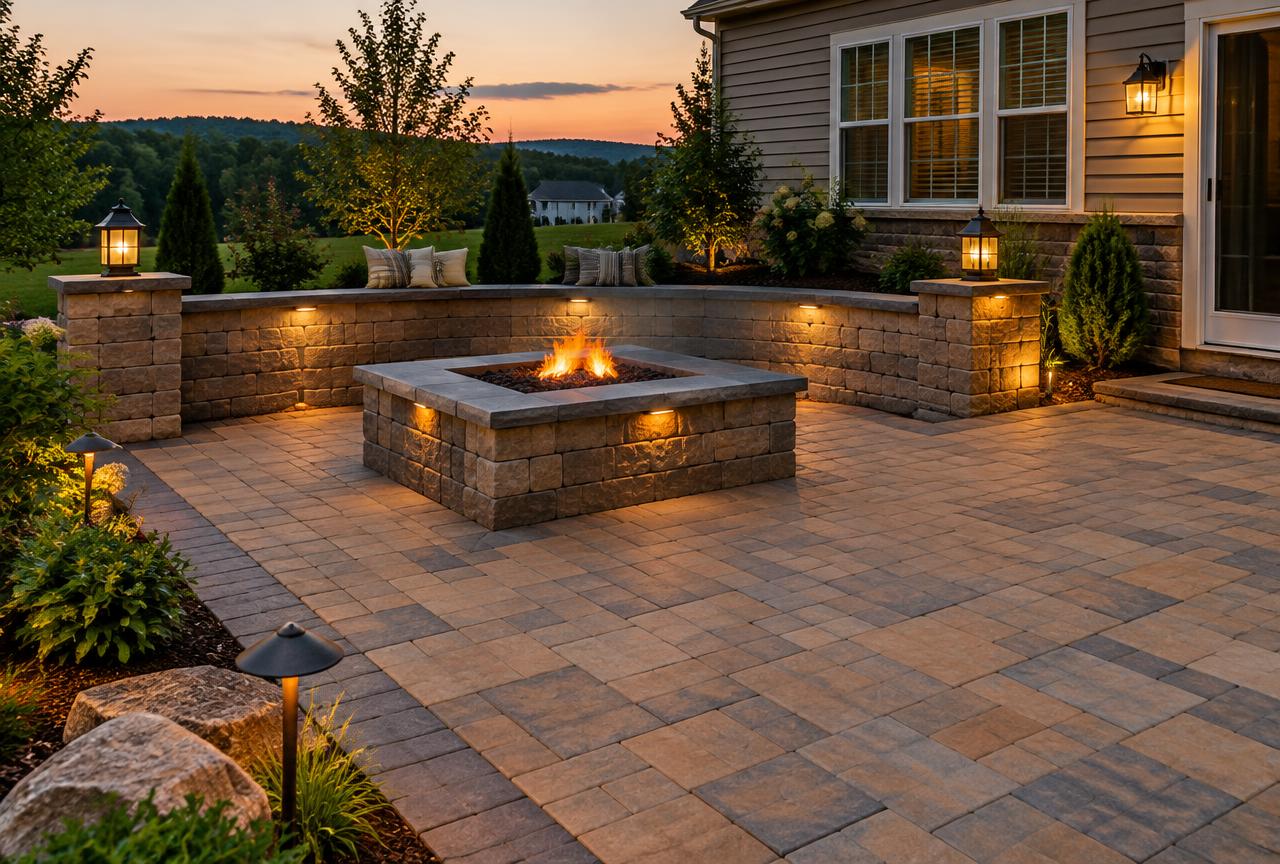
Hardscaping covers anything in your yard that is built, not planted. In Newtown and across Bucks County, the most asked-for projects are paver patios, natural stone walkways, front steps, seat walls and fire pits.
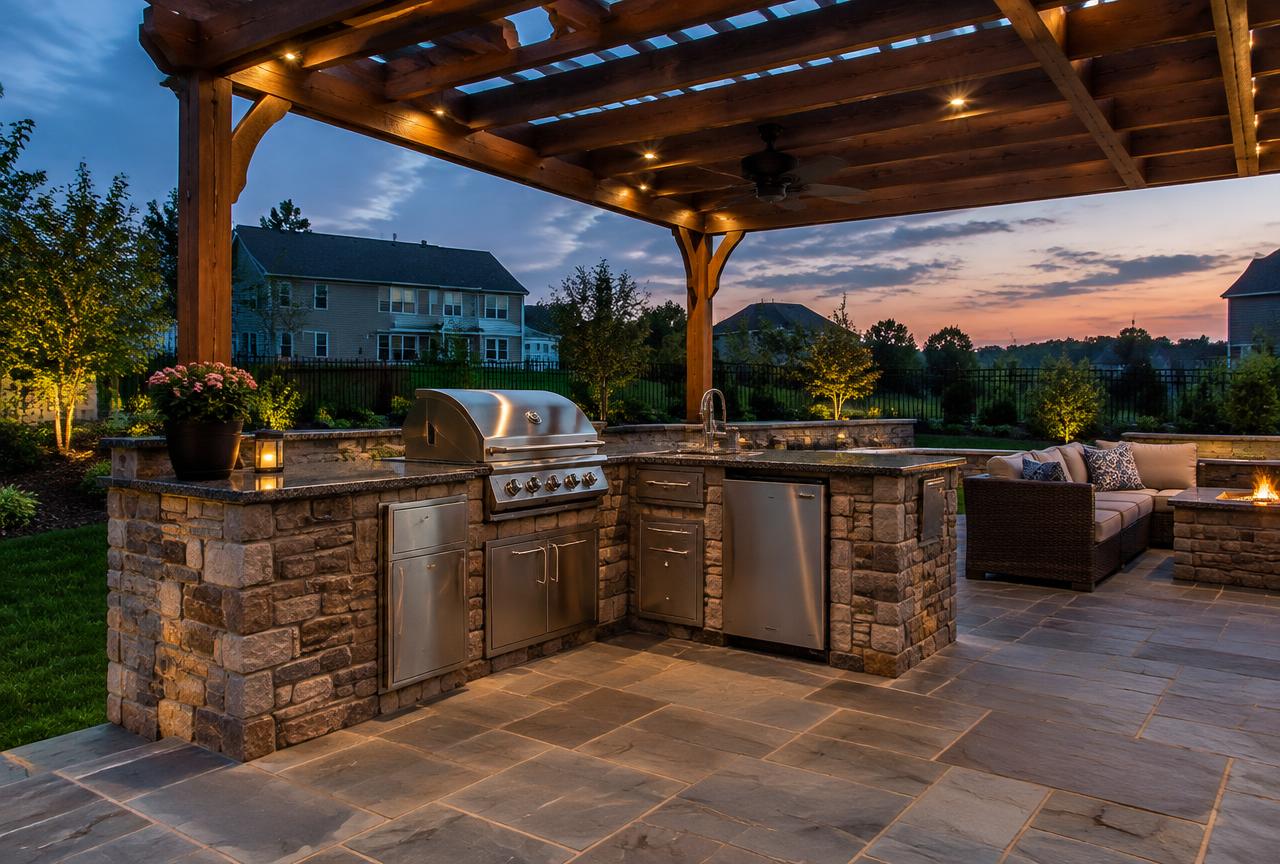
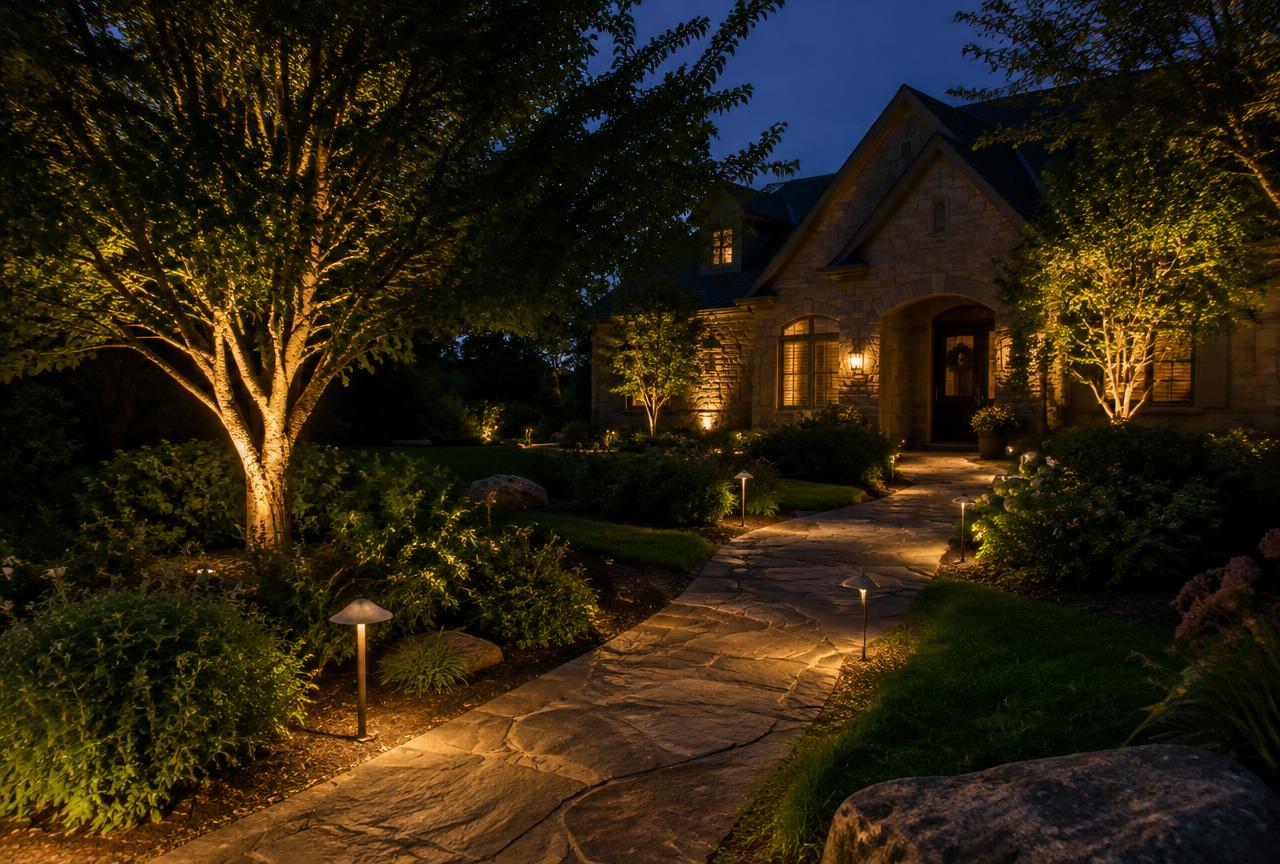
Many homeowners start with one piece, like a patio off the back door. Later they add a walkway, lighting or an outdoor kitchen. A good plan up front makes each new piece fit with the last.
- Paver and bluestone patios
- Walkways and garden paths
- Front steps and landings
- Seat walls and pillars
- Fire pits and fire tables
- Paver driveways and Belgian block edging
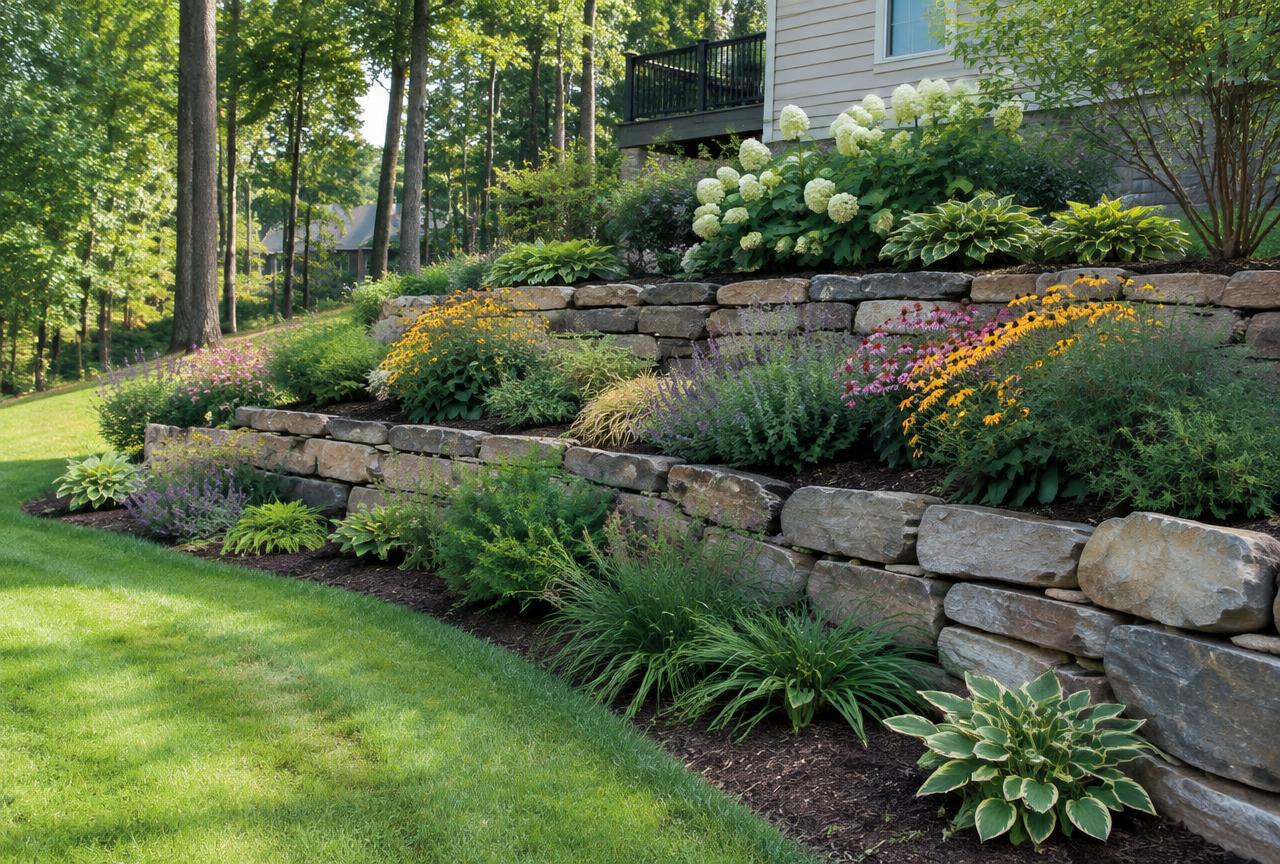
- Landscape masonry and stone repair
Why the base matters most in Bucks County
The part of a patio you never see is the most important. Bucks County has a lot of clay soil. Clay holds water and moves when it freezes and thaws. If a patio is built on a thin base, it can sink, crack or heave after one or two winters.
A well-built patio sits on a dug-out bed filled with packed gravel. The gravel is pressed down in layers. Then comes a thin layer of bedding, the pavers or stone, and an edge that holds it all in place. Joints are filled with polymeric sand, which hardens and helps stop weeds and ants.
When you get quotes, ask each company how deep they dig and how thick the gravel base is. A low price with a thin base often costs more later.
Pavers vs. natural stone
Concrete pavers come in many colors and shapes. They are even in size, so they go down fast and are easy to repair. You can lift and reset a single paver if one sinks.
Natural stone, like Pennsylvania bluestone or flagstone, has a classic look that fits older stone homes in Newtown, New Hope and Washington Crossing. It often costs more, but many people love how it ages.
There is no single best choice. A local pro can bring samples and show how each looks next to your house.
Planning around water
Every patio should slope a little away from your house so rain runs off. In low yards near creeks, like some parts of Yardley and Langhorne, a pro may suggest a drain or dry well before the patio goes in. Fixing water first protects your new stone work and your basement.
How it works
Getting help is simple. You fill out the short form on this page. We pass your request to one local landscaping company that serves your town. They call or text you to set up a visit.
At the visit, they walk your yard with you, listen to what you want, and look at things like slope, sun, soil and water flow. Then they give you a written quote. You decide if you want to move forward. There is no cost to ask.
- Step 1: Send the short form (about 1 minute).
- Step 2: A local landscaper reaches out to plan a visit.
- Step 3: You get a written quote for your yard.
- Step 4: You choose if and when to start.
What changes a hardscaping quote
Prices vary a lot, so we do not list numbers. These are the things that move a quote up or down.
- Total size and shape.
- Material: pavers, bluestone, fieldstone or brick.
- How much digging and base is needed.
- Slope, steps and walls.
- Access for machines.
- Extras like lighting, fire pits or drainage.
Best time to build
Most hardscape work happens from spring through late fall, when the ground is not frozen. Booking early in the year helps you get on a schedule.
Hardscaping near you
See local details for your town.